
**This post may contain affiliate and ad links from which I could receive a small commission**
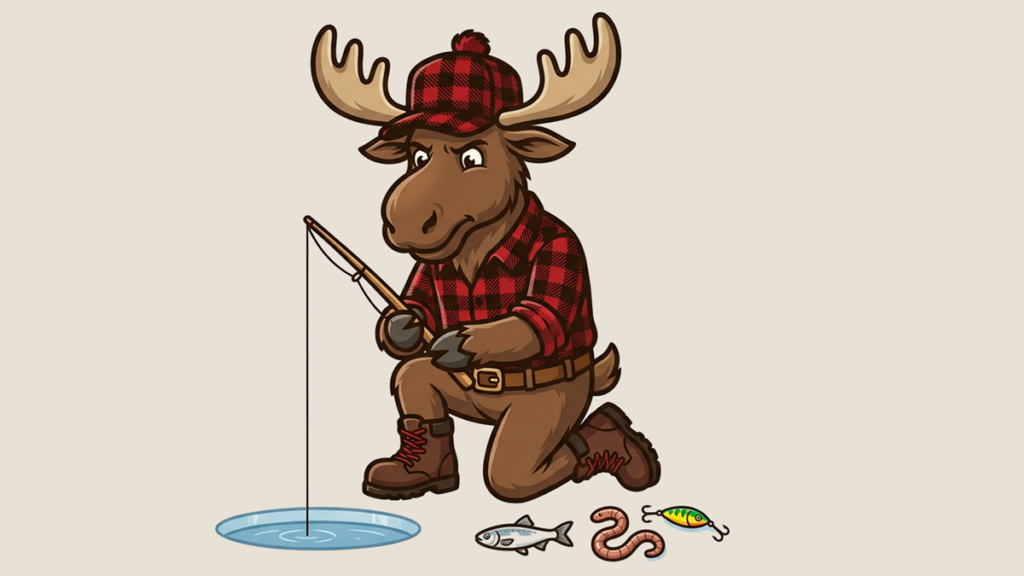
If you think you’re just going to drop a hook and a prayer through a hole in the ice and go home with a limit, you’re dreaming, bub. Choosing the right bait is the difference between frying up Togue for dinner and stopping at the Hannaford for a frozen pizza. I’ve spent many a years testing what works in the hard watah, and I’m telling you now: the fish are as picky as a flatlander at a lobster bake.
Jigging Lures For Ice Fishing Bait
Artificial lures are perfect for jigging. You don’t need a suitcase-sized tackle box to catch fish, but you do need these three staples. If you show up without ’em, you’re just wasting gas. A quick overview of the type and what fish you can expect to catch. All three types should be part of your fishing tackle arsenal when heading out on the ice for a day of fishing. Fish act differently on different days, so have all possibilities covered could mean all the difference.
Swimming Jig
Most experienced fishermen will tell you that when fishing through the ice, the swimming jig is a must-have in the tackle box.
Walleye, Bass, Pike, and Lake Trout are the common fish caught with these. But don’t be surprised if you catch other species of fish as well. The most common size swimming jigs are size 5 and size 7.
Lipless Crankbait
These lures are short and fat and have a noisy rattle to them when jigged rapidly.
This lure will also catch Walleye, Bass, Pike, and other game fish.
This rattle will tend to put the predatory fish into an irritated state. This causes them to bite, not because of hunger but because they are mad.
Jigging Spoons
Jigging spoons like Swedish pimple and Fluted spoons work well for most smaller game fish.
you can fish them as is, or place a small minnow head attached to the treble hook.
Night Crawlers For Ice Fishing
Night Crawlers are great bait for ice fishing. Doesn’t matter if you are fishing for Perch, Trout, or any other game fish. They all love crawlers. The big tip when using crawlers as bait is don’t go gobbling a whole crawler on the hook like it’s a summer day on the farm. A tiny piece is all you need to fool a Perch or a Trout. Too much meat and you’ll just be getting ‘nuisance flags’ all day while the fish strips your hook clean.
Minnows For Ice Fishing
Live bait is king for Rainbows and Pike, but don’t just toss ’em in and hope for the best. If you’re jigging a dead shiner, take your pocket knife and pop the air bladder. If that bait doesn’t sink like a wounded fish, a smart Togue is going to swim right past it.

Smelts As Bait For Ice Fishing
Rainbow Smelts make great ice fishing bait for Most fish you are fishing for, but are really great for Salmon, Togue (Lake Trout), and Bass. There are three ways you can use smelts when ice fishing. You can cut the smelts into chunks and bait your hook with the pieces, you can bait your hook with a live smelt or a dead one that was previously caught and froze.
How To Hook Live Smelts For Bait
There are two popular ways to hook smelts. One is to pierce the hook through their mouth. The belief is most predatory fish swallow their prey, tail first. While this does work, many live smelts have broken free before any fish are caught.
The other way is to use a thin sharp hook and hook just under and behind the dorsal fin on the smelt. This works best if the smelt is a little on the larger size. Big game fish tend to try and attack from the side taking bites out of the middle of their prey.
How To Rig Dead Smelts For Bait
When fishing with dead smelts the most common method is to take your knife and poke a hole in the smelt to get the air out so they will “dive” quicker once placed in water. Do not use sinkers on your line, the weight of the smelt is enough. Hooking them just under the back portion of the dorsal fin will give them a nose down position. This helps imitate a wounded, dying smelt.
Suckers
Most Outta Statahs look at a sucker and think it’s just a trash fish, but if you’re hunting Pike, Walleye, or Togue, you’re looking at one of the best baits in the Maine woods I tell ya. You can fish ’em whole if you’re after a monster, but most of the time, suckers are just used as cut bait.
The trick with sucker meat is the skin—it’s tough as a boiled boot and stays on the hook through a lot of abuse. But if you just slap a square chunk on there, it’s going to sit like a stone at the bottom of the lake. To really make it work, you’ve got to give it some life.
New to ice fishing? Check out Ice fishing Gear.