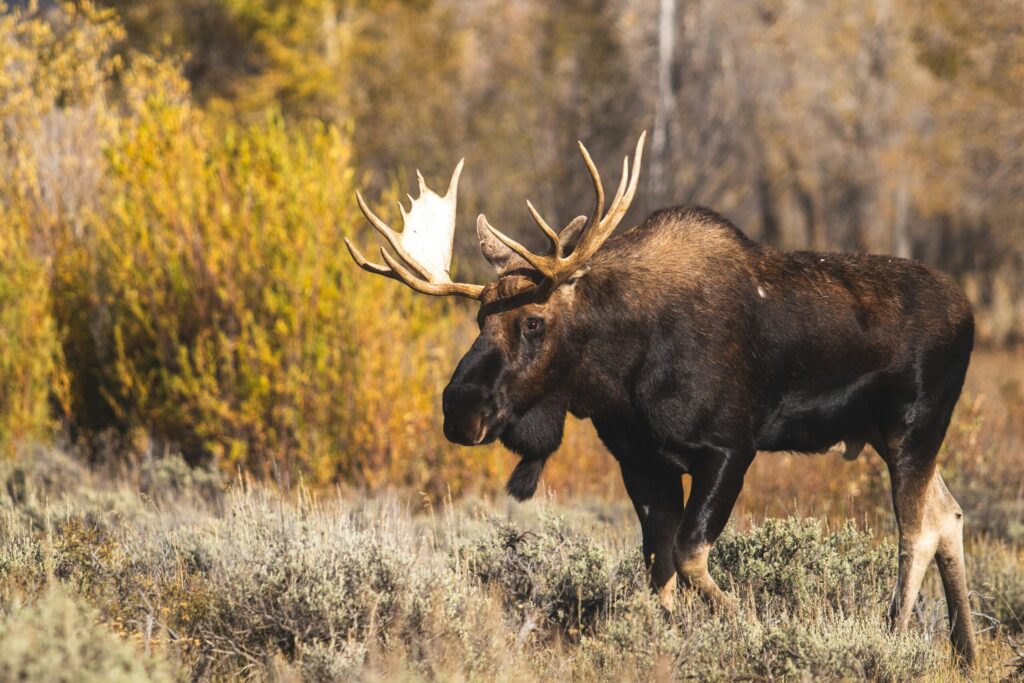
Maine has more moose than any other state in the lower 48. We’re talking 40,000 to 60,000 animals out there right now, crashing through bogs and standing chest-deep in ponds while you’re stuck in traffic. And yet most people who visit never see one. That’s not bad luck. That’s not knowing where to look.
This guide fixes that.
Quick Facts
- Scientific Name *Alces alces americana*
- Type Mammal
- Weight 800–1,100 lbs on average, bulls being larger
- Height at shoulder Up to 7 feet
- |Habitat Boreal forest, wetlands, river corridors, regenerating cuts
- Best Time to Spot Dawn and dusk — but they move all day
- Maine Population** | 40,000–60,000 (largest in the lower 48)
*Source: Maine Department of Inland Fisheries & Wildlife
Where to Find Moose in Maine
You’re not bumping into a moose in Portland. These animals live in the big woods — and Maine has plenty of it. Core moose country is northern and western Maine, but they turn up statewide so never fully drop your guard.
Your Best Bets:
- Moosehead Lake Region — Ground zero. The road from Greenville up toward Rockwood at dawn is about as reliable as it gets.
- Baxter State Park — The Tote Road early morning. Bring patience and coffee, in that order.
- Aroostook County — Big open country, loaded with wetlands. People from away don’t make it up there much, which means the animals are less spooked.
- Route 201 (The Old Canada Road) — Drive it slow at dusk. Just do it.
- Any roadside bog or beaver flowage in the western mountains — Moose need sodium in their diet and aquatic plants are packed with it. Find the lily pads, slow down.
The real trick: Moose aren’t hiding from you. They live where the food is. Find the wetlands and young regenerating forest cuts, find the moose.

What Moose Actually Do All Day
Understanding behavior is what separates someone who sees moose from someone who doesn’t.
Spring & Summer — Moose spend serious time in the water. Rivers, ponds, bogs — they’re eating aquatic vegetation which is loaded with the sodium they crave, and escaping black flies at the same time. They feed for short bouts then move back into the woods to ruminate and find shade. Timing matters — you need to be at the right spot when the moose is there.
Fall Rut (September–October) — Bulls are running on pure hormones and not making great decisions. You’ll see them walking out on roads in broad daylight without a care in the world. Prime viewing — and prime danger on the roads. Slow down.
Winter — Once vegetation dies back, moose leave the water and move into young upland forest cuts where there’s plenty of woody browse — willow, aspen, birch, maple, balsam fir. They’re conserving energy and can be surprisingly aggressive if you stumble into them. Give them room.
Are Moose Dangerous? Yes, Bub.
People underestimate moose because they don’t look like predators. Big mistake. An 1,100-pound animal can put you through a tree without much effort.
Warning Signs a Moose is About to Ruin Your Day:
- Ears pinned flat back
- Hair raised along the neck and shoulders
- Head lowered and swinging toward you
- Stomping or bluff charging
- Grunting or woofing sounds
What to do: Put something big and solid between you and it — a tree, a truck, a boulder. Don’t run in the open. Moose can hit 35 mph and they hold a grudge longer than you’d expect.
Cow with a calf — This is your most dangerous encounter, full stop. A cow moose protecting her calf will not hesitate. If you see a calf, assume mom is 20 feet away and back off immediately without turning your back.
Moose on the Road — Read This Part Twice
This is the section that actually matters for most people driving through moose country.
**⚠️ Moose eyes do not reflect in vehicle headlights.**
Deer light up like reflectors. Moose don’t. The Maine DOT puts it plainly — watch for the silhouette, not the eye shine, because by the time you’re close enough for headlights to matter you’re already in trouble. Add to that the fact that a moose is tall enough that your bumper hits its legs, which means the body drops through your windshield, and you’ve got a genuinely life-threatening situation.
The numbers back this up. Maine data from 2003 to 2017 recorded over 7,000 moose-vehicle collisions in the state. A moose collision is more than 13 times more likely to result in a human fatality than a deer collision. Most crashes happen just after sunset, with a secondary peak near sunrise — and the late spring and summer months are the highest-risk period.
Night Driving in Moose Country:
- Slow down, especially May through October
- Watch for dark shapes and silhouettes, not eye shine
- Moose lick salt off wet pavement — be extra alert after rain
- If one moose crosses, expect another right behind it
- If a crash looks unavoidable, brake hard, aim for the tail end of the animal, and duck
The Winter Tick Problem
Here’s something most people don’t know, and it matters for understanding Maine’s moose herd right now.
Winter ticks are hammering moose calves in Maine. A single moose can carry tens of thousands of ticks through the winter — they attach in the fall as larvae and stay on the same animal through all three life stages until spring. Unlike deer and elk, which have evolved alongside tick populations, moose haven’t developed effective ways to deal with them. The result is severe blood loss, hair loss, and weakness.
According to MDIFW research, winter tick infestation is the leading cause of death for moose calves under one year old in Maine. Warmer, shorter winters caused by climate change have made the problem worse by giving tick larvae more time to find hosts in the fall and giving adult females more time to lay eggs in the spring.
It’s why you’ll sometimes see a moose in late winter or spring that looks rough — patchy, pale, and thin. Those are the ghost moose, and they’re in serious trouble.
Moose Tracks

Moose leave one of the most recognizable tracks in the Maine woods once you know what you’re looking at.
What to Look For:
- Large split hoof, roughly 5–6 inches long
- Blunt, rounded toe tips — unlike the sharper points of a deer track
- Dewclaw impressions — two small dots behind the main print, especially clear in soft mud or snow
- Deep impression — a big bull in soft ground will sink several inches
- Long, deliberate stride — up to 5 feet between steps at a walk
Moose vs. Deer: Moose tracks are 2–3 times the size of a whitetail deer track and noticeably more rounded at the tips. If it looks like a giant deer track, it’s a moose track.
Think you can spot one in the field? Take the Maine Track Challenge and find out.
Fun Facts Worth Knowing
- The word “moose” comes from the Algonquin word *moosu*, meaning “bark stripper” — which is pretty accurate
- Moose are not herd animals — seeing two together outside of rut season is unusual
- Aquatic plants are a major part of their summer diet because they’re high in sodium, which moose crave
- A newborn calf can outrun a human within days of being born
- Maine’s moose permit lottery draws over 70,000 applicants a year for roughly 4,000 permits — one of the most coveted hunts in the country
The Bottom Line
Maine’s moose population is the biggest in the lower 48, and they’re not that hard to find if you know the spots and the timing. Get up early, find the water and the young cuts, drive the back roads at dusk, and for the love of everything — slow down at night.
They’re wild animals that have been here a lot longer than we have. Give them room, know the warning signs, and keep your eyes on the road after dark.
Sources:
[Maine Department of Inland Fisheries & Wildlife]
[Maine DOT Wildlife Safety]