In many states, running into a “Wildlife Officer” is just a bureaucratic headache. But in Maine, the Game Warden is a figure of quiet authority. They’ve got police powers over a jurisdiction bigger than some European countries. If you’re deep enough in the puckerbrush, a Warden is likely the only form of rule-of-law you’re gonna see for days.
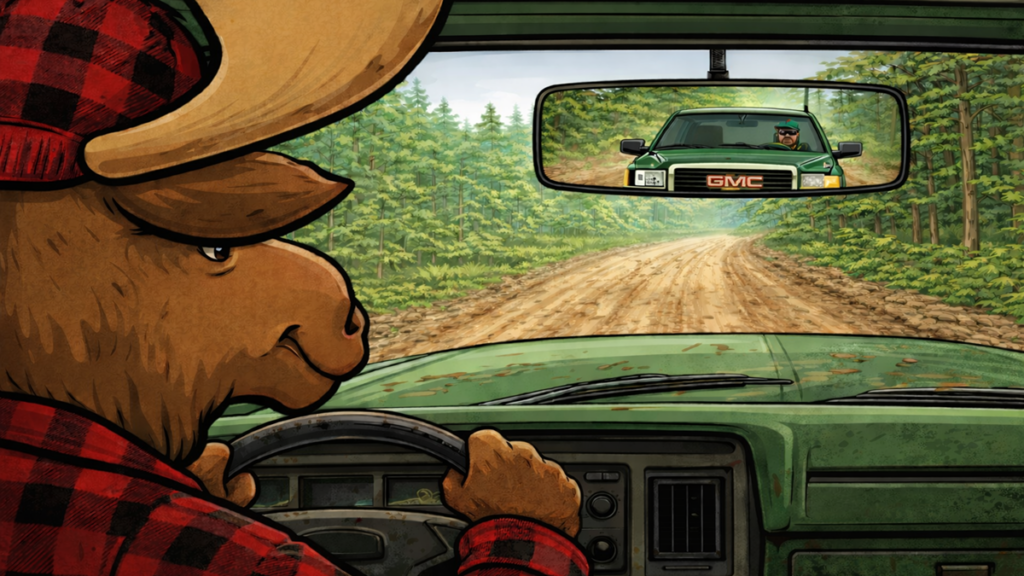
The “lore” isn’t about outsmarting ’em; it’s about understanding their reality. Here’s how a Maniac handles that green truck—from the first glimpse in the rearview to the “stay safe” at the end.
1. The Mandatory Field Ethic
Before you even open your trap, your camp or your rig is doing the talking for you. A Warden’s first scan isn’t your face; it’s your environment.
- The “Clean Line” Rule: Keep a tight ship. If your campsite looks like a dumpster fire with loose trash and unsecured coolers, you’ve already failed the vibe check. A clean camp says you respect the land; a messy one says you’re a liability.
- The Intentional Pause: If you see the green truck on a narrow logging road, find a wide spot and pull over. Don’t wait for them to flash the lights. Pulling over to let them pass—or to offer a quick nod—shows you’re paying attention and aren’t looking for a rabbit hole to hide in.
2. The Dashboard Hand (Safety is Respect)
Being a Game Warden is a lonely, dangerous gig. Making them feel safe is the fastest way to keep the interaction short and sweet.
- Hands Visible: When they walk up to the window, keep your hands on the wheel. Don’t start digging for your registration like you’re looking for a lost french fry.
- The Transparency Move: If you’re carrying, tell ’em. “Just so you’re aware, I’ve got my sidearm in the console and a fixed blade on my belt. How do you want me to handle the paperwork?” Calling it out before they see it earns you instant “Mainah” points.
3. The Local Insight: Your “Second Pair of Eyes”
This is your best move. Don’t just stand there like a tourist waiting for a ticket. Provide intel.
- The “Odd Toe” Intel: Instead of a generic “seen any deer?”, try this: “Hey, just a heads up—I was over by the beaver dam on the north ridge and spotted some fresh coyote tracks with real odd toe spacing. Looked like a limp in the gait.”
- Why it works: Now you aren’t just a guy with a fishing pole; you’re a field observer. You’ve positioned yourself as a “second pair of eyes” in their jurisdiction. That earns respect.
4. The No-Nonsense Paperwork Pivot
Nothing kills the mood like fumbling through a soggy wallet for a license that’s been through the wash.
- The Setup: Get a clear, waterproof sleeve. Put your license, truck registration, and any permits in there. Tuck it in the visor or a specific pocket in your pack.
- The Execution: When the Game Warden ask, you hand it over in three seconds flat. It tells them you’re organized, compliant, and—more importantly—that this isn’t your first rodeo.
5. The “Gear Talk” Filter
Game Wardens are gear nerds, but they can smell “all show, no go” from a mile away.
- Talk Function, Not Brand: Have a fancy camo patterned thing-a-mabob? Don’t brag about your fancy camo or price. Talk about the terrain. “The GPS has been spotty under the heavy canopy near the height of land. You heard if the local repeaters are acting up?”
- Use the Landmarks: Use names like “the old washout” or “the cedar swamp” instead of GPS coordinates. It proves you’ve actually got boots on the ground.
6. The Gate Check: The “Slow Roll”
A gate is a bottleneck where a Maine Game Warden can read your whole day in thirty seconds.
- Give ’em Space: If they’re parked at a gate, don’t ride their bumper. Stop twenty feet back. It’s a sign of patience.
- The Visual Audit: While you’re waiting, check your passenger seat. If there’s a rifle, make sure the action is open. A Warden’s eyes hit your gear before they hit your eyes.
7. The Surprise Camp Visit: Coffee or Copper?
Nothing gets the heart thumping like seeing a green shirt walking into the glow of your campfire at dusk.
- Stand and Greet: If you’re sitting, stand up. Don’t walk toward them—let them come to the fire—but acknowledge they’re there.
- The Host Move: “Fresh pot of coffee just finished. You got time for a cup, or are you chasing someone?”
- The Reality: They’ll probably say no, but the offer alone shifts the dynamic from “Suspect” to “Host.”
- Manage the Hounds: If you have dogs, get ’em under control fast. A lunging dog is a threat they have to respond to; a quiet dog is a sign of a disciplined camp.
8. The Exit
Before they leave, ask one question that shows you value their expertise: “Seeing much moose activity up toward the border lately?” Finish it with a simple, “Stay safe out there.” They spend all day dealing with people who are nervous, annoyed, or lying. Being the guy who was prepared, helpful, and sharp makes you the guy they’ll remember—and the guy they’ll help out when you’re the one who’s stuck in the mud.