
Science, Luck, and Old Wives’ Tales
The Longest Season
There is a specific kind of madness that sets in around late March in the North Woods. The snow is gray, the mud is rising, and the lakes are trapped under a layer of “rotten ice.” You can’t walk on it, and you certainly can’t put a boat through it.
Predicting the “Ice-Out”—the moment a lake is officially free of ice from shore to shore—is the official sport of the Maine spring. Here is how the Maniacs separate the experts from the tourists.
1. The “Black Ice” Phase
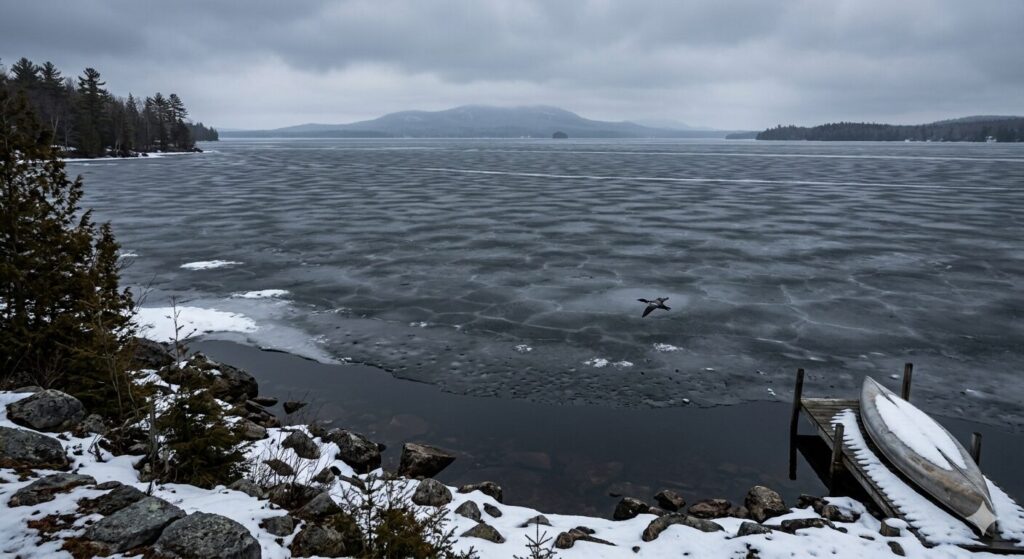
The first sign of the end isn’t melting; it’s changing color. When the snow on top melts and the water soaks into the honeycombed structure of the ice, the lake turns a deep, dark lead-gray.
- The Science: This “Black Ice” is actually millions of tiny vertical crystals (candles) standing side-by-side.
- The Bet: Once the lake goes black, you’re usually within 10 days of open water.
2. The “Wind is the Winch”
Heat doesn’t melt the ice as fast as people think. It’s the wind that does the heavy lifting.
- The Physics: Warm rain helps, but a steady 20-knot wind acts like a giant hammer. It creates internal pressure that snaps those vertical “candles” apart.
- The Sign: Watch the shoreline. When you see a “moat” of open water 10 feet wide between the ice and the rocks, one good windy night will turn that whole sheet into a slushy memory.
3. The “Loon” Indicator
Keep your windows cracked and listen. The loons always know. They’ll fly over a frozen lake, circling like a plane waiting for a runway.
- The Legend: When you hear that first haunting yodel echo across the woods, the ice is usually gone within 48 hours. They don’t like to waste time once the buffet (the trout) is open.
4. The Official “Ice-Out” Rules
In the old days, “Ice-Out” was called when a mail boat or a steamer could make its full run without hitting a floe. Today, it’s usually called by the local “old-timer” at the general store or a spotter pilot.
- The Maniac Rule: It isn’t Ice-Out just because you can launch your canoe. It’s Ice-Out when the big lake is clear enough to run a motor wide-open without flinching.